
Posts in Incidents
When something breaks, two clocks start: the one until you notice, and the one until your client does. These posts are about keeping the first one short, reading error patterns, routing alerts to someone who is actually awake, and putting something useful on a status page before your inbox fills up.
Posts in Incidents

Maintenance Windows Done Right: Planned Downtime Without the Alert Avalanche
How a maintenance window pauses alerting during planned work and shows the downtime cleanly as maintenance instead of an outage in your status history.

Setting Up Monitoring Alerts in Slack, Teams & via Webhook
Setup per channel: Slack, Microsoft Teams, webhook, plus the webhook payload structure (JSON) for your own pipelines. With examples.

Setting Up Escalation Policies & On-Call Routing for Small Teams
Escalation chains without PagerDuty complexity: how small agencies without a 24/7 NOC set up reliable on-call routing, step by step.

Client Emails Landing in Spam? What Causes It and How to Catch It Early
Why client emails land in spam: blacklisting, missing DKIM/SPF, poor IP reputation, and how continuous monitoring catches it early.

An Expired SSL Certificate: The Reputation Disaster No Client Forgives
What happens when an SSL certificate expires, browser warning, loss of trust, and how automatic expiry alerts prevent the reputation disaster.
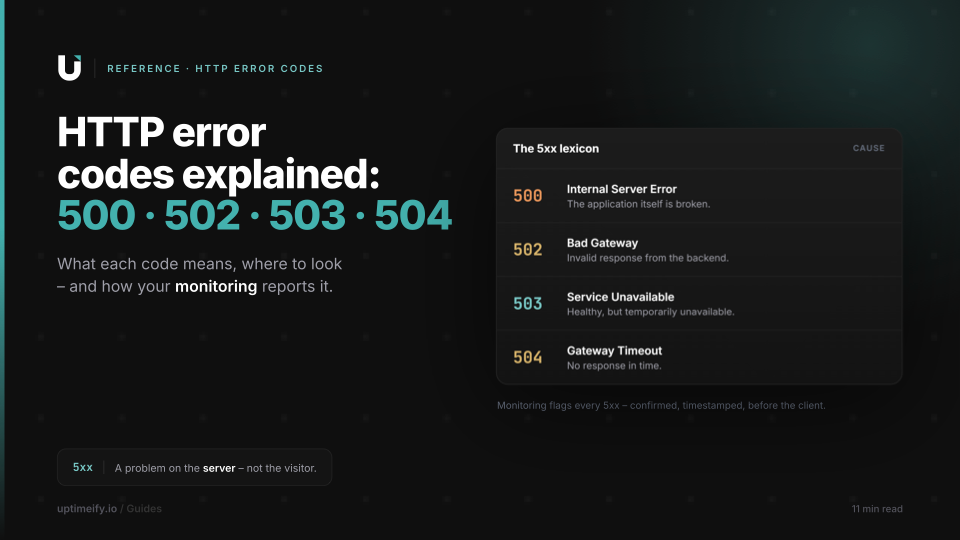
HTTP Error Codes Explained: 500, 502, 503, 504 and What They Mean for Your Clients
An error reference for the key HTTP 5xx codes: cause, fix, and how monitoring reports the error before your client calls.

"Site Unreachable" While the Server Runs: When DNS Is the Problem
Why a site looks "down" while the server runs fine, DNS hijacking, expired delegation, wrong records, and how to catch it early.

When Big Services Go Down (YouTube, WhatsApp & Co.), and What They Teach About Status Communication
Why millions check the server status during an outage, and what the giants' professional status communication gets right that any agency can adapt at small scale.

Communicating Incidents & Maintenance Windows: Status Updates That Build Trust
Templates for incident and maintenance communication that reassure the client instead of alarming them, from the first update to the all-clear.

